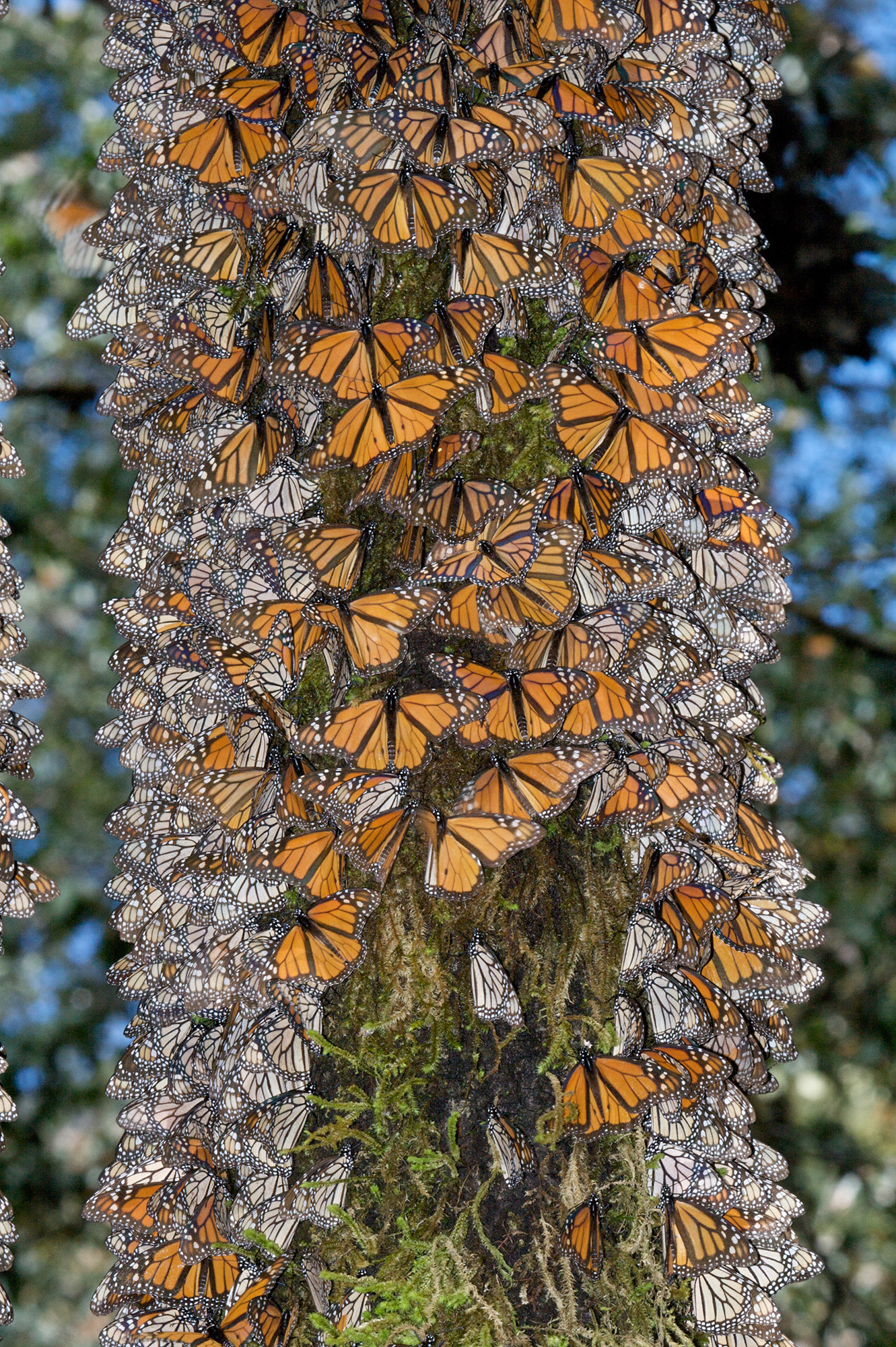
**Monarch Migration: The Seasonal Journey Capturing America’s Attention** Every year, a silent wave sweeps across North America—the slow, magnificent movement of monarch butterflies. These striking insects undertake one of nature’s most remarkable migrations, traveling thousands of miles to reach golden forests in central Mexico and coastal California. For new generations of nature lovers and curious minds, the monarch migration has become more than a seasonal phenomenon; it’s a cultural and ecological narrative unfolding each fall. Audiences across the U.S. are tuning in—through documentaries, citizen science efforts, and social media—driven by a shared fascination with this behavior and its growing association with broader environmental trends. Why has monarch migration shifted into a mainstream conversation now? Several converging factors explain its rising visibility. Rising interest in native pollinators and conservation has sparked widespread awareness. Simultaneously, widespread media coverage of declining monarch populations has fueled curiosity about the challenges behind this iconic journey. Social platforms amplify real-time sightings and migration updates, making the journey visible and immediate. For many, monarch migration symbolizes resilience, interdependence, and the quiet beauty of nature’s cycles—elements resonating deeply in an era of environmental uncertainty. So, how does monarch migration actually work? Each fall, generations of monarch butterflies respond to environmental cues—changing day length and cooling temperatures—to begin their multi-stage journey. The eastern population travels up to 3,000 miles, reaching dense oyamel fir forests in central Mexico, while a smaller western group moves to coastal California. These butterflies extend their lifespan to six to eight months—far longer than their summer counterparts—allowing time to travel and lay eggs eventually. Their lifecycle, synchronized with the migration rhythm, unfolds in layers: breeding, feeding, resting, and navigating using the sun and Earth’s magnetic fields, all guided by centuries of evolutionary adaptation. Despite its magnificence, monarch migration involves complex challenges. Habitat loss, climate shifts, pesticide use, and disrupted seasonal cycles threaten both the butterflies and their delicate ecosystems. Scientists and conservationists emphasize that public engagement—through citizen science, native plant gardening, and policy support—plays a crucial role in sustaining this natural phenomenon. Yet, the migration also inspires hope: small, collective actions can make meaningful difference.
### Why are monarch butterflies disappearing? Habitat loss, especially the decline of milkweed—their only larval food source—has significantly reduced breeding grounds. Combined with climate volatility and widespread use of herbicides, these pressures weaken population numbers. ### How far do monarch butterflies migrate? The eastern population migrates up to 3,000 miles, flying across the U.S. and southern Canada to reach Mexican highlands. The western group travels similar distances to coastal California forests. ### When does monarch migration occur in the U.S.? The fall migration peaks between late August and mid-October, with peak activity tied to daylight shifts and temperature changes, though some璝)、璒 remain through early winter. ### How do monarch butterflies navigate thousands of miles? They rely on environmental navigation—sun position, magnetic fields, and cues from temperature and flora—passed down through generations, not learned behavior. ### What can I do to support monarch migration? Plant native milkweed and nectar flowers, reduce pesticide use, preserve autumn blooming habitats, report sightings via community programs, and stay informed about conservation efforts. While monarch migration remains a symbol of natural wonder and environmental fragility, it also offers a tangible way for individuals to connect with larger ecological health. For those curious about saving this migration, action starts with awareness—and the movement itself is a living invitation to participate in nature’s resilience. The journey continues, shaped by every flutter, every forest, and every choice made today.
You Won’t Believe What Lies Beneath Zurich Airport’s Runway
Stop Your Zions Bank Login From Failing — Emergency Fix Inside Now!
You Won’t Believe What Comes After Season 3 in Yellowstone’s Wildest Turn!
